Wednesday, 14 May 2014

Focus On The Water…


glass-300558_640There’s an old sales story which basically goes:

Two shoe salesmen were sent to a corner of the world to see if there was a market for their product.  The first salesman reported back, “This is a terrible business opportunity, no-one wears shoes.”  The second salesman reported back, “This is a fantastic business opportunity, no-one wears shoes.”

Yes, it is probably an urban legend. However, in sales terms it is a demonstration of the ‘glass half empty’ ethos. Do you focus on the problem or the solution is essentially the question.

It can get deeper than that – depending on the situation you’re in, your focus can alter. A sales area where you’re confident may see you leaning more often, if not all the time, towards solutions. Yet, an area where your skills aren’t as sharp, or experience not as deep may see you more often focusing on the problems.

The end goal is to understand in what situations you err towards focusing on the problem – this quickly highlights the areas where you could develop. Often it’s easier for those around us to tell us this – not that we usually like this. Sales Managers and Leaders can usually see ‘problem orientated’ thinking quite easily, but the challenge is identifying the skill gap that’s causing it.

It can be as simple as not having the skills to deal with it. For example, the first shoe sales person above may have only ever sold to people replacing shoes. He has no strategy for those that have never worn them.
It could be they’ve tried before and it didn’t work. Again, the first shoes sales person may have tried to sell someone shoes who doesn’t wear them and failed and assumes it will happen again.

Next time you find yourself or your sales team making negatively biased statements around what can’t be done….ask yourself (or them) it is because you’re focusing on what’s not in the glass, rather than the water that’s is.

But I’m Not A Sales Person


dA___no_more_salesNot every one in a sales organisation is explicitly charged with selling. They may not hold the role of ‘Business Development Manager’, ‘Client Manager’ etc. They may not have responsible for managing clients, championing a product or closing deals with clients.

However, one thing is true in largely every ‘for profit’ organisation – it would stop existing if the revenue line in the Profit and Loss Statement was zero.

Whilst only some in an organisation are clearly measured on sales – as a whole, most organisations’ purpose for being is revenue. How then can anyone within it suggest they aren’t responsible for sales?

Whether this is supporting those who are selling, adminstration, logistics or being directly responsible for sales – EVERYONE in an organisation is a ‘sales responsible’. Everything they do is focused on the revenue line as, without it, there isn’t a business to work for. For example – even if your role is managing costs, these costs only exist because there’s a client willing to buy your product/services.

The sole responsibility for sales doesn’t sit exclusively on the sales teams/departments shoulders – it is carried by all within the business. Everyone should be looking for opportunities to grow the top line, all the time.

Everyone should be challenging the business to sell more and do so more efficiently.

Everyone has the ability to improve a businesses top line.

Every conversation within the business should be focused on those that generate that revenue – the client.

Challenge anyone in an organisation that says ‘But I’m Not a Sales Person’

Thursday, 8 May 2014

Put People First…

focusgroup12Raise ‘sales’ in a workplace and you’ll instantly alienate some of the audience. Many have either had poor sales experiences or, worse, no experience but listen to those that don’t like it.

The interesting thing is, much like this blog, there is a plethora of material around to make you that great sales person. Scripts, processes, courses, features and benefit analysis and the list continues unendingly.


What good sales people actually do – is what they don’t do. They don’t listen to this noise. They don’t labour themselves with a rigid process or script. They don’t think what they do. They don’t over think how they do it.

What they do is have a very strong grasp on is why they sell. People.  Helping them improve their situation.   They understand that behind every process is a person. Benefits are only meaningful to people. A script only works if a person is prepared to listen.

There is a book I would encourage every sales person, in fact everyone, read. It was written many years ago. It is a brilliant handbook for sales – yet isn’t a sales handbook. Why? It discusses people. It just so happens – when you address the people part of selling, the balance actually takes care of itself and you don’t need to worry about it.

The book is Dale Carnegie’s How to Win Friends & Influence People. Why am I recommending this? Because no matter how hard I try – I just can’t write a more compelling piece on the importance of people.  It is also so important to me, it should be to you as well.

A good sales person will read this book and, if they don’t already , will understand why they’re good. Someone who is less skilled at sales will have an epiphany.

In order to become success at selling – focus on one thing. People. Declutter the rest of your process. Focus on your client. Help them and you will, ultimately help yourself.

If you’re truly interested in more about this – please let me know. It just so happens I know the perfect person to talk to about it.

But I’m Not A Sales Person

dA___no_more_salesNot every one in a sales organisation is explicitly charged with selling. They may not hold the role of ‘Business Development Manager’, ‘Client Manager’ etc.

They may not have responsible for managing clients, championing a product or closing deals with clients.

However, one thing is true in largely every ‘for profit’ organisation – it would stop existing if the revenue line in the Profit and Loss Statement was zero.

Whilst only some in an organisation are clearly measured on sales – as a whole, most organisations’ purpose for being is revenue. How then can anyone within it suggest they aren’t responsible for sales?

Whether this is supporting those who are selling, adminstration, logistics or being directly responsible for sales – EVERYONE in an organisation is a ‘sales responsible’. Everything they do is focused on the revenue line as, without it, there isn’t a business to work for. For example – even if your role is managing costs, these costs only exist because there’s a client willing to buy your product/services.

The sole responsibility for sales doesn’t sit exclusively on the sales teams/departments shoulders – it is carried by all within the business. Everyone should be looking for opportunities to grow the top line, all the time.

Everyone should be challenging the business to sell more and do so more efficiently.

Everyone has the ability to improve a businesses top line.

Every conversation within the business should be focused on those that generate that revenue – the client.

Challenge anyone in an organisation that says ‘But I’m Not a Sales Person’

Tuesday, 15 April 2014

Cart Before Horse

imageProspecting is hard – winning clients harder still. There are many strategies. Many perceived ways of going about it.
Many though don’t think to put the cart before the horse. By this I mean they make grandiose promises of what value the prospect can expect or will receive once they become a client, but don’t show them until the client commits. Ironically, promised value is often valueless until they see it.
This is particularly true where the prospect has heard these promises before, but failed to see execution.
It is easy to say what you’ll do, it is harder to be authentic and deliver on it.
Why don’t sales people do this? Possibly because it’s ‘showing your hand’. Or because the risk of expending the effort and not winning the client in the end. Or because they just don’t think to. Or, worse, because the promises are empty.
Prospects should choose you because you SHOW meaningful value, not because you promise it.
Show your prospects what it’s like to be client of yours, then ask them the become one.

Friday, 11 April 2014

Keep The Ball In Play

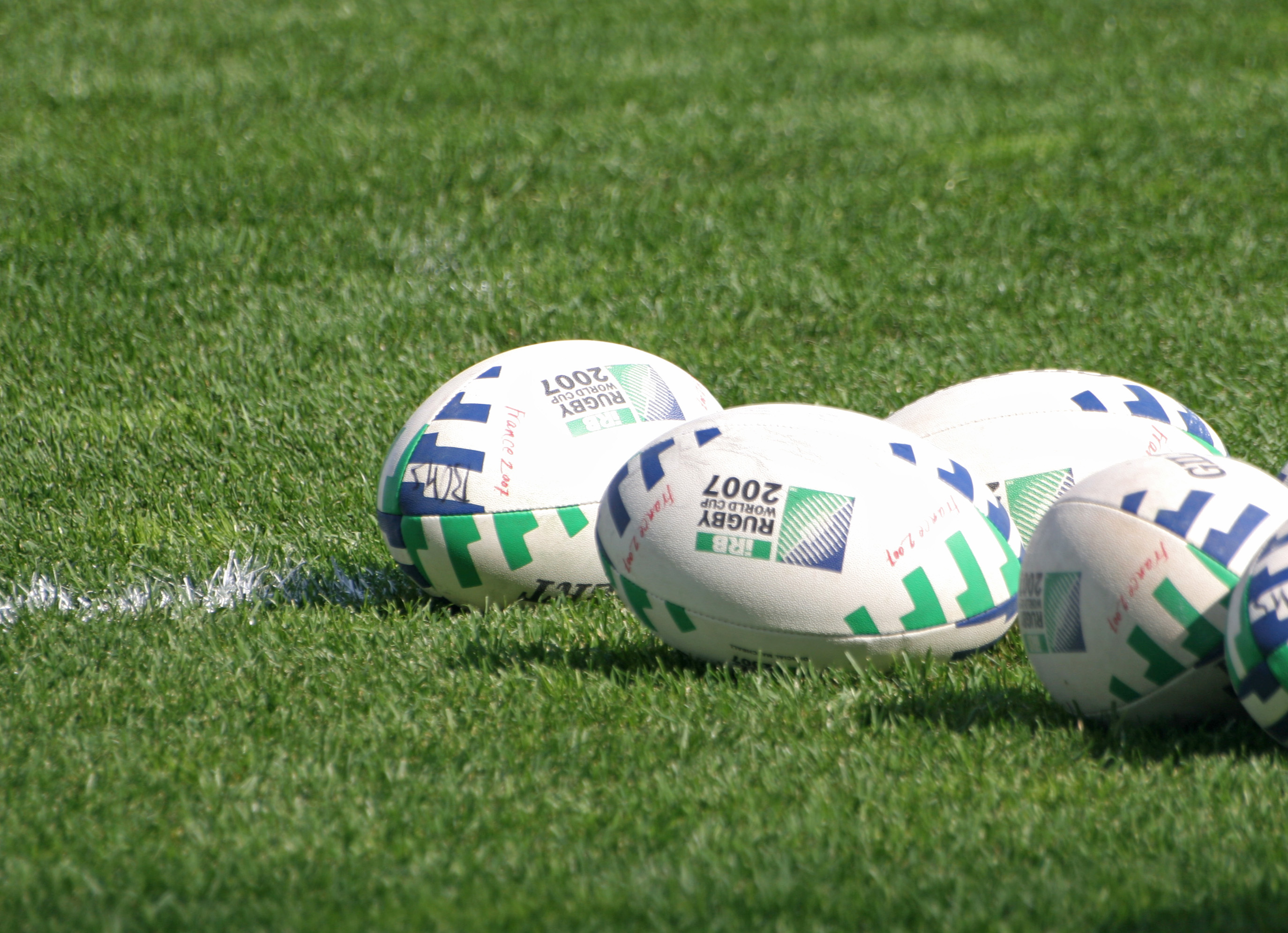
2007_Rugby_World_Cup_ballsIn recent times, we’ve seen the NZRFU and IRB adopt various experimental law variations to keep the ball in play longer, with fewer stoppages and more running rugby, thereby creating a more free-flowing, faster and exciting style of play.

You may recall the stat (right or wrong, but it’s the point that matters) that at one stage only 27mins of an 80min game were actually real running time. The rest of the time was used up in fixed plays/stoppages like scrums, line outs etc. A necessary part of the game, but not the key parts. Not the purpose of rugby. ELV’s aimed to improve this.   To spend more time playing the running game, less time stationary.  Keeping the ball in play.

Now think about your sales process? When was the last time you looked at how much time was spent doing the core sales activity, versus the time spent doing the bits surrounding it (the stoppages). Is the balance right? Are you ‘keeping the ball in play’.

There are many conflictions in sales that can prevent/inhibit us from selling – CRM notes, admin, responding to internal emails etc. Sure, some of these things need to be done. But are you consciously or unconsciously choosing to let them rank ahead of sales activity?

Like the NZRFU and IRB – you need to look at what ‘sales time variations’ you need to put in place to limit the things that prevent you from true sales activity to increase the portion of your available time to ‘sales running time’ rather than stoppages. Keeping the ball in play.

Truly think about it. You have so many hours in the week, how many of them do you truly dedicate to sales? If not many, why? What things are you letting prevent you from selling.

Maybe you need to follow the direction of rugby and change the way you ref your sales time to keep the ball in play more often?

Tuesday, 8 April 2014

Magpie-ing

Cracticus_tibicen_hypoleuca_male_domainIn sales we can be guilty of collecting or searching for ‘shiny things’.  Things that look important and are worth showing off, but don’t necessarily add value to what we do or amount to anything of value.

This isn’t meant as toys – but refers to prospects.  It is very easy to fill ones pipeline up with these ‘shiny things’ to make ourselves and/or our bosses feel better.  We then have important things in our pipeline – we and they feel better.

We’ve all seen it and, no doubt, some of us have been guilty of it.  Chasing those ‘shiny things’ – referring to them at every opportunity, showing them off when someone asks what in your pipeline.  Coveting them, but doing very little productive with them.  Magpie-ing

What does this do to us?

It distracts us from real prospects.  Real business.  Real value.  Some of the best prospects aren’t glamorous, aren’t big names.  In fact, most aren’t.  ‘Shiny things’ are notoriously slippery and, when we finally realise we can’t hold on to them, we suddenly realise the opportunity cost(s) of being so fixated on them.

It also makes for difficult conversations with your boss when you finally have to strip these ‘shiny things’ from your pipeline.

Most shiny things are coveted by many people, yet the person who currently holds it usually knows it’s of value, loves it to death and, therefore, it becomes very difficult to make it yours.

Sales Managers aren’t immune from this either.  Actions by sales managers can reinforce this behaviour, this blind pursuit for trophy prospects.  For example, only celebrating the shiny things in your pipeline reinforces the belief that, as a sales person, you must find them to be recognised as good.  So you chase them.  Sometimes blindly.

You should start from a solid foundation of which prospects are your ideal clients.  Sure, some of these may well be ‘shiny things’ – and, in fact, some should be.    Filling your pipeline is important – but please fill it with meaningful prospects, otherwise it just becomes a distraction.

You have to ask yourself three questions:

1.    Is this a client I am likely to be able to win?
2.    If yes, can I demonstrate the value needed to displace it?
3.    How long will this take?

If you can’t answer yes to 1 and 2 – don’t bother with 3.  It doesn’t mean drop it entirely, it just means de-prioritise it until something changes that you can change the answer to these questions.

Don’t magpie and base your entire sales strategy around ‘shiny things’.  Otherwise you may just end up with a nest full of great names in your pipeline and no business written.