Wednesday, 24 September 2014


Friday, 27 June 2014
Share The Driving

Many courses will talk about mirroring – mimicking interpersonal, verbal and physical cues during an interaction with another person.
Some sales courses will even use mirroring as a technique to create develop or enhance rapport.
You can see this very easily in face to face encounters….the earliest is smiling at a baby, they (usually) always smile back at you. And most certainly nearly all adults smile when a baby smiles at them!
As sales people, we’re all attuned to interpersonal cues in face to face meetings and, often, on the phone. Body language, tone, actions etc all help complete the communication signal and help confirm (or contradict) what is being said, or tell us the real story.
How does this work for business development?
What happens if you don’t call your best friend for a while? They typically call you to see how you’re doing at some point.
As sales people, we are conditioned to hunt, to be tenacious. We diarise vigorously to follow up intermediaries/future clients on a regular call cycle. We touch base with regularity. We live in the fear (real or otherwise), if we don’t call, our competitors will steal the march on us and form a better relationship. We sometimes do it because we have imposed call cycle requirements. We don’t always do it because it is in the best interests of the relationship, it is done because we think we have to.
Yet, despite the scheduling of call cycles - we’ve all had the experience that, despite how much we ring someone, we make that call that uncovers that X weeks ago they just signed up with X. Why didn’t’ you ring us? You ask. Maybe because your view of the value of the relationship was lop sided.
They may have spoken to someone else less often, but the relationship was more meaningful to them.
Why is this important?
Sometimes patience is a great way to test the relationship. Were you not to call (lean back) would your client/intermediary call you (lean in). Would they fill the void left by you not calling? Would they miss contact with you? Do they care enough to make contact themselves?
It helps show you the value the other party sees in the relationship – where they prioritise it. Is there benefit to both sides of the relationship. Do they care enough about the relationship to call you if you don’t call them?
How often you talk to someone isn’t important (despite this being thrashed in sales courses) – the quality of the interactions is. How meaningful it is matters. How much value you give matters.
‘Sharing the driving’ in a business development relationship is important as, ultimately, it is the clients destination you want to arrive at, not yours.
I Fire You

Every sales person has, or will have, experienced the conversation where a client has told you that they're leaving you for another supplier. They fire you.
We all have clients we don't like dealing with. And, if we don't like dealing with them, it is highly likely we aren't exactly giving them the experience they deserve. Further, if we don't like them, it is naive for us to then assume they like us is it? Not exactly a healthy relationship. In a personal situation - we'd have little to do with that person.
Have you ever considered firing your client?
You possible have considered it but do we ever fire them?
Very seldom. We struggle on through gritted teeth - shuddering when the phone rings and it's them (worse, dodging the call). We continue to deliver mediocre service to them, focusing on our 'loved' clients instead.
At what cost?
Not liking at client affects many things in a business relationship. Because you don't like them, you aren't thinking about them. As a result, you don't seem to encounter or identify ways to improve their situation as readily. You don't act as proactively. You don't go the extra mile (in fact, sometimes just the opposite occurs). You don't prioritise them. You don't cherish their business. You sometimes wish they'd 'go away'. The relationship therefore becomes flawed.
Not liking a client doesn't make them a bad client. Not liking a client doesn't make them an unprofitable client - though, delivering poor service can make it seem this way.
Not liking a client is human. We don't like everyone and, hold on, not everyone likes us. Get used to it.
So what do I do?
We have choices - we can choose whether to like a client or, it we don't, whether to maintain the relationship.
First and most importantly - you need to determine whether the client is one whose business you wish to retain. Park your ego for a moment and ask the simple question - is it just me? Is it your personality? If it is, and you can fix it - fix it. Reset the relationship with them. If you can't fix it, consider moving the relationship to someone who doesn't have your dislike for the client. Someone who will engage differently and give them the service they deserve. Guess what - more often that not, failing to do this is why your clients fire you! Most customers leave you because of issues in service.
Of course, if they are genuinely clients you don't wish to retain, ask why you don't like them if it's not personal? Is it because their and your business are fundamentally divergent? Is it because their and your values aren't aligned? Are you heading in different directions? Are they just too different from your business - your offering doesn't completely satisfy their need or want and there's too much compromise. 'Is the situation recoverable' is what you're trying to understand. If it is, recover it. If not, consider letting them go. Doesn't this sound like a personal relationship? Guess what, basically it's the same.
Have the courageous conversation with your client. Be honest. Guess what - they're thinking it anyway!
Monday, 23 June 2014
Make Each Dart Count

If you haven’t, 9 darts are the minimum number of darts required to clear the 501 points - the starting total. It is the ultimate way to win a leg – and very difficult to achieve. You need to hit two 3 dart maximums of 180 and then a 141 on your final three darts (of which there are 1 of 2 ways to do this) – every dart needs to hit where it was aimed. It is like a 300 in bowling or 147 in snooker.
It doesn’t happen very often – though every dart player first addressing the board has a 9 dart leg in mind. What often happens is a mis-directed dart is thrown which requires them to change their strategy to finish the leg.
Sales isn’t any different – we all meet with clients with the anticipation of a smooth, linear sales process. You start on ‘501’ and aim to get to zero in ‘9 darts’. However, very seldom does it happen this way. Often either the client throws in a curve ball or, sometimes, we derail the sales process ourselves.
Many sales people fret over this – yet it is completely normally. Sure, some sales go to plan – but most don’t. Most require you to reassess out way to get to ‘zero’ – to close out the sales action (whether a minor leg like arranging a meeting or bigger like closing the sale).
Darts is easy in this respect – zero is absolute. There is a math formula to work it out. Sales isn’t. The end differs on each stage and, unfortunately, can move. It requires you to constantly assess the ‘board’ to work out the next best path to your outcome and, sometimes, whether your outcome is actually still desirable.
Here are some things to remember:
- Start with the end goal in mind and have a plan to get there (your ‘9 Dart Finish’) and constantly assess it. Like darts, if you know the end goal in your sales process, adapting to the current situation becomes far easier.
- Whilst the ultimate aim is to win the business, focus on the specific outcome you’re currently engaged in. Don’t try to win the match in a single leg. If you’re ringing to get a meeting – this is your outcome, not closing the sale.
- Don’t panic if you lose one leg (eg don’t get that meeting), reassess and re-approach again when appropriate (ie sales isn’t always successful, we do lose some)
- Even the best players lose a match only to win another day. Some clients will not close out successfully, but it doesn’t mean you’ll never close them. It just means you missed this opportunity. Good clients remain good clients whether they said no or not.
- It’s not about throwing as many darts as possible – it’s about throwing the right dart at the right place. Think about the ‘next best step’ when working with your clients through the sales process. You get to your outcome one dart at a time, make each count and the sales process is easier.
Like Darts, in sales you need to make each activity count – plan it, execute it, review it.
Wednesday, 18 June 2014
The Big Question

Sales courses everywhere and over all time espouse the virtues of asking clients open ended rather than closed questions.
It works. If your questions are considered and relevant you undeniably get more information than you would if you asked closed questions.
Why?
It’s like showing your workings in a maths exam – it shows your thinking, not just your answer. Great for a sales person – it provides the ‘why’ behind an answer (if you ask the right question).
Questions and answers are great – many CRM’s are full of great responses to great questions.
Now – consider this – imagine your client gets to ask you one open ended question at the end.
Imagine that question is:
‘What are you going to do with all the information I've just given you?’
The Biggest Hurdle

Prospecting is the skill of identifying and engaging with new business. Whether stone cold calling or seeking introductions and referrals to warm the contact up – it is the pointy end of the sales spectrum. For some sales people it represents all of their role – the pure hunters.
More often though it represents only part of the sales role you undertake. You accumulate customers and relationships over time, which reduce the perceived need to prospect as regularly. Sometimes, you even develop the feeling that you don’t need to do it at all. You have customers and intermediary relationships – they can do it for you. You can ask for referrals. You can wait for business to find you. Prospecting becomes less important to you, so you do less of it. Most people don’t like prospecting for new business, so avoid it.
Suddenly, you need more business as your targets have increased, or your pipeline dries up, or you’ve tapped out your known network or the growth potential of your clients slows or stops. Prospecting rears it’s head again – but it’s hard to know where to start, how to pick it up again.
In my experience, a few things typically happen here. Some will just get on and do it, and do it well. The few. The many will either try it sporadically – be unsuccessfully and quickly slide back to scavenging for business – or they just won’t – they’ll avoid it, look like they’re doing it but won’t.
Why do most fail in this situation?
Most sales people have the skills – if you can sell to an existing client, you can sell to a prospect – so that’s not the issue (if it is, your sales leader has bigger issues than prospecting).
Most sales people can use a phone, speak to people, sell themselves and their business and network – or should be able to
Most sales people can, if they wish to, find lists of potential targets and research them – sure the quality may vary, but they can do it.
However, most people fail in this situation due to not planning. They don’t set time aside on a regular basis to truly focus on prospecting. Most fail because they don’t treat is seriously. Because they hope it is only a short term glitch in their pipeline, they take a short term focus to prospecting. They think the first thing to prospecting is picking up the phone – they don’t plan their strategy.
If you wish to develop new business well and you can sell, the first and most important step is setting time aside in your diary every week to focus on it. Having the time away from the routine of your role allows you to focus on the task of prospecting properly. It forces you to address it and action it.
As a sales leader – this is the first thing to check – does you staff have regular time set aside each week/period to grow their book. If not, they just aren’t planning properly.
Most people don't fail at new business acquisition because they don't have the skills, they fail because they aren't preparing to do it properly.
Pot Well

I’ve enjoyed Snooker since I was 14 (a long time) and only just picked my cue back up recently after an extended break. Having recently read a LinkedIn article about Life Lessons From Fishing (http://tinyurl.com/kg4mtnx), I got to thinking about what Snooker can teach us about sales while watching my opponent build an impressive break against me.
Interestingly, there are a number of parallels – so here goes:
Practice There is no shortcut for getting better at snooker. Even with raw potting talent, you need to spend time over your cue, practising. Sales is no different – do you practice your sales techniques? Do you reflect on what is working and what is? Why you succeeded and failed? Do you hone your craft? You can’t get better if you don’t practise, and you certainly can’t if you don’t play.
The Break: In snooker, the table always starts the same. However, after the break, the chances of two tables being the same are infinitesimal and grow smaller with each shot. Similar with sales – once we initiate contact with a new client (the break) – there is next to no guarantees as to what paths the conversations will happen to take there after. Sure, we have some control each time we approach the table, however we have to continually assess and react to the table when it next becomes our turn. As a sales person, it is your acumen and attitude that shape how you perform after the break
Position In snooker, where your cue ball is on the table means everything. It can make a shot incredibly easy, or incredibly difficult. More importantly, it is where the cue ball will be after your shot which is crucial to the flow of the game. In snooker they call this break building – in sales, pipeline management. Sales is no different – you need to visualise the journey and how your next interaction gets you there. Like the snooker player who needs to read the table, their opponents ability to capitalise on mistakes, the angles etc – you as the sales person need to read the position continually, thinking about where you next want the process to go and how to get it there
Pot Well Regardless of how good you are at getting the right position, you need to pot the ball you’re standing over first. Like sales, you need to execute well each time you address the ball. Consistency and focus are important, like snooker, to ensure that you execute well each time. Like a high break in snooker, most B2B sales situations require a string of high quality interactions, not just one. Being great once won’t win you a snooker match, nor many sales.
Cut Your Losses Sometimes there isn’t a pot on – nothing to sink. Or, your opponent is so good that the risk if you miss a risky pot is too high. Sales is no different – sometimes you need to cut your losses and retreat in order to pick up the fight later. Sometimes the timing isn’t right, the competitor is stronger or other factors that mean that in order to stay in the battle, you need to know when to fight and when to retreat.
Patience Snooker can sometimes be a tedious game (for some of you, this describes it). A game full of negative safety play for example. Sales is no different – sometimes the victories are small, sometime non-existent. Some times you even foul and go backwards to have to rebuild. Sometimes you can’t control the situation – like an opponent that goes on to make a big break despite you leaving them safe.
Resilience Snooker is about the top 6 inches. Once you’re on the table, your opponent can’t influence anything you do – physically. Though they can mentally – if you let them. Sales is no different. You will have difficult clients, difficult situations, strong competitors and a plethora of other challenges. They only become difficult if you let them influence how you react to them. You will lose some frames and some matches. You will lose some sales and get some knock-backs. Sometimes you get told no.
Etiquette Snooker is a sport steeped in a rich etiquette. Competitively, it is still played in vests and ties. At club level, you still get your opponents ball out of the pocket. You congratulate them for a great shot. You apologise when you fluke to your advantage. Sales isn’t any different. Dress properly, be courteous, be interested and interesting, don’t malign your competitors – respect them, don’t blame the conditions or your opponent. You’re the expert – act like one.
Fun Snooker is highly social and very good fun. It is easier to play when you’re having fun and not anxious. Sure, some situations are tense like when playing in a competition – but still enjoyable. Sales is no different – doing it because you enjoy it is far more productive than doing it because you’re told to. Find the fun in selling
I enjoy the sport immensely – often to the bewilderment of those that know me. I enjoy because it despite playing against an opponent on the scoreboard, I am playing against myself each time. Sales isn’t much different. I can’t blame my opponent when I miss a shot, or miss position on the next ball. I can’t blame my client if they don’t wish to buy my product/service.
Pot well, each and every time. Sell well, each and every time.
Measure Attitudes

Sales is a very intuitive skill.
As it’s a people based discipline, everyone will find their own way of doing it. As a result, some find successful ways, others not so much. As a sales leader, this becomes difficult as a successful sales person may not sell precisely to the process desired by the business - or an unsuccessful one may follow that process but still fail.
However, however the good sales people sell, some things are always consistent:
- Attitude – good sales people talk positively about sales. They enjoy it. They don’t avoid it – they seek it. They’re hungry and one success is never enough. Success doesn’t happy by accident. Sales leaders hear this in their language, see this in their actions.
- Service - good sales people are focused on providing the best service to their clients – not products. They want to help their clients, not sell them. They have the clients in mind – all the time.
- Planning – good sales people plan. Their success doesn’t happen by accident. They know their sales targets, where they sit against them, what they have coming up this week and what they wish to achieve out of that meeting. They know their workload and it’s priority.
- Prospects – good sales people have a clear line of sight to their prospects – their future clients. They know them not by industry horizontal or vertical – they know them by name. They have a laser focus on those they wish to do business with.
- Activity – good sales people are active. They hunt and are proactive. Regardless of their workload – they are selling. It is how much activity they do which varies based on their need. They have momentum.
- Pipeline – good sales people have a very clear understanding of their pipeline. At what stage each deal is at, what can move it on and an action plan to do it. They know when it needs filling and where their ‘dead spots’ are. They live in their pipeline.
- Networks – good sales people develop and maintain a network. They don’t have many shallow relationships, they have deep and tight relationships with key people. Rainmakers. Like minded people who support one another – professional friendships. Solving clients issues through relationships, not pieces of work.
- Team Player – good sales people realise they can’t succeed alone. They develop and maintain good relationships within the business to support their success. They appreciate and recognise those who help them succeed. They encourage success in others
- Reflection – good sales people review their failures and their successes looking for ways to improve. They seek feedback from others.
Regardless of how a good sales person achieves success – somewhere unpinning their success are all the above.
Often, in sales leadership, the focus is on following a process/system or framework for successful sales. Sure, this provides a means to categorise the various aspects of sales (eg giving names to phases of the pipeline or common terminology).
Sales leadership is about managing these disciplines with your sales team – not the activities or processes. If you measure the activities, you will hit numbers, if you encourage and measure the above, you’ll get results. The difficulty is a) these are hard to measure and, importantly, b) they are unique to each person.
Thursday, 5 June 2014
Hunt or Scavenge

Good hunters learn about their target, learn about their history, where best to find them, how best to approach them, how best to engage, which are preferable over others. Do you show your targets this respect?
Or do you stumble upon them, who ever, where ever, when ever – eating what ever you can find, rather than that which tastes best? Do you scavenge?
Scavenging is easy – so many do it. Many survive doing it, like the vulture in nature. Waiting for RFP’s to be issued, rather than displacing a client. Waiting for clients to approach you, rather than approaching them. Sure, you’re selling. But are you having fun? Scavenging usually involves either waiting for a good hunter to finish with their target (or scare them off), finding dead or dying targets or attacking the slowest or weakest target.
The problem with this strategy is you often can’t choose who you do business with. You have to take what you can get. You also can’t control when you encounter it.
Hunting allows you to choose the best target – the ones you really want. If you really want them, you try harder and enjoy it more. The reward is richer. Hunting allows you to fill the larder whereas scavenging usually just fills you plate.
Indeniably, hunting requires more effort than scavenging, however even if you don’t win your target, it is much more enjoyable spending time hunting than sitting in the office and waiting for the phone to ring….

Thursday, 29 May 2014
Which Came First, Value Or Price
Value is the driver of price. If someone is marketing you a product you have no need or want for, they have to drop their price until the point you start to value that product, if they're marketing you a product you really want or end, that price can be much higher.
Good products command higher prices because people value them more. Sure, this can be down to the quality of the parts, or, and more likely, due to the value of the whole.
What does this say if you discount your price about what you think about your value?
What does this say about your service?

Thursday, 15 May 2014
Bake The Cake With Love
 Most
of us have experienced the absolute joy of a home made cake made by a
parent or grand parent. Most of us have also helped them make them as
some point. They taste just that much better than a store point
commercial cake don’t they?
Most
of us have experienced the absolute joy of a home made cake made by a
parent or grand parent. Most of us have also helped them make them as
some point. They taste just that much better than a store point
commercial cake don’t they?In sales, that cake is your proposal/package to your client. So, why is this analogy important to think about?
So, if the cake is the end output of sales – the offer. The ingredients are the various components that make up that offer – the products, services, pricing, value proposition etc. The recipe is the process you used to get there – the journey – and how much of the various components are added and used within the proposal to get to the end position. The person baking the cake is the expert – they’re making the decisions on what to use & when.
And now is where we deviate. Your parent or grandparent bakes this cake with love and emotion. They bake this cake knowing you like the cake a little denser, with more chocolate chips. They WANT you to enjoy it, it means so much to them as they will usually get much pleasure from your feedback. They have a recipe – but choose to use it or adapt it. Also, it’s even better when you, as the consumer, have participated in the baking process.
Now the commercial cake is made with the intention of it tasting good – but completely remotely to you, as the consumer, and your tastes and preferences. Guesses are made. A recipe is often followed precisely to ensure consistency and control costs. Ingredients are selected against a compromise of costs and quality.
Which would you rather eat? Isn’t the picture above already making you hungry?
Next time you’re selling to a client consider the following – ‘I am baking this cake with love?’ Think about: Why am I selling to the client? What reaction do I want from them (focus on the emotion)?
The reaction question is important – the cake made for you was made because your parent or grandparent WANTS you to enjoy it. They know you’ll eat it (ie: the sale will conclude) – but this isn’t enough, they want you to LOVE the cake. In sales terms, this means your client can accept your proposal, but it doesn’t mean they LOVE it. A signature or commitment isn’t an emotion.
The great things that happen in selling aren’t often because we have great products or great pricing. They happen because we do them for great reasons.
Wednesday, 14 May 2014
Focus On The Water…
 There’s an old sales story which basically goes:
Two shoe salesmen were sent to a corner of the world to see if there was a market for their product. The first salesman reported back, “This is a terrible business opportunity, no-one wears shoes.” The second salesman reported back, “This is a fantastic business opportunity, no-one wears shoes.”
Yes, it is probably an urban legend. However, in sales terms it is a demonstration of the ‘glass half empty’ ethos. Do you focus on the problem or the solution is essentially the question.
It can get deeper than that – depending on the situation you’re in, your focus can alter. A sales area where you’re confident may see you leaning more often, if not all the time, towards solutions. Yet, an area where your skills aren’t as sharp, or experience not as deep may see you more often focusing on the problems.
The end goal is to understand in what situations you err towards focusing on the problem – this quickly highlights the areas where you could develop. Often it’s easier for those around us to tell us this – not that we usually like this. Sales Managers and Leaders can usually see ‘problem orientated’ thinking quite easily, but the challenge is identifying the skill gap that’s causing it.
It can be as simple as not having the skills to deal with it. For example, the first shoe sales person above may have only ever sold to people replacing shoes. He has no strategy for those that have never worn them.
It could be they’ve tried before and it didn’t work. Again, the first shoes sales person may have tried to sell someone shoes who doesn’t wear them and failed and assumes it will happen again.
Next time you find yourself or your sales team making negatively biased statements around what can’t be done….ask yourself (or them) it is because you’re focusing on what’s not in the glass, rather than the water that’s is.
But I’m Not A Sales Person
 Not
every one in a sales organisation is explicitly charged with selling.
They may not hold the role of ‘Business Development Manager’, ‘Client
Manager’ etc. They may not have responsible for managing clients,
championing a product or closing deals with clients.
Not
every one in a sales organisation is explicitly charged with selling.
They may not hold the role of ‘Business Development Manager’, ‘Client
Manager’ etc. They may not have responsible for managing clients,
championing a product or closing deals with clients.However, one thing is true in largely every ‘for profit’ organisation – it would stop existing if the revenue line in the Profit and Loss Statement was zero.
Whilst only some in an organisation are clearly measured on sales – as a whole, most organisations’ purpose for being is revenue. How then can anyone within it suggest they aren’t responsible for sales?
Whether this is supporting those who are selling, adminstration, logistics or being directly responsible for sales – EVERYONE in an organisation is a ‘sales responsible’. Everything they do is focused on the revenue line as, without it, there isn’t a business to work for. For example – even if your role is managing costs, these costs only exist because there’s a client willing to buy your product/services.
The sole responsibility for sales doesn’t sit exclusively on the sales teams/departments shoulders – it is carried by all within the business. Everyone should be looking for opportunities to grow the top line, all the time.
Everyone should be challenging the business to sell more and do so more efficiently.
Everyone has the ability to improve a businesses top line.
Every conversation within the business should be focused on those that generate that revenue – the client.
Challenge anyone in an organisation that says ‘But I’m Not a Sales Person’
Thursday, 8 May 2014
Put People First…
 Raise
‘sales’ in a workplace and you’ll instantly alienate some of the
audience. Many have either had poor sales experiences or, worse, no
experience but listen to those that don’t like it.
Raise
‘sales’ in a workplace and you’ll instantly alienate some of the
audience. Many have either had poor sales experiences or, worse, no
experience but listen to those that don’t like it.The interesting thing is, much like this blog, there is a plethora of material around to make you that great sales person. Scripts, processes, courses, features and benefit analysis and the list continues unendingly.
What good sales people actually do – is what they don’t do. They don’t listen to this noise. They don’t labour themselves with a rigid process or script. They don’t think what they do. They don’t over think how they do it.
What they do is have a very strong grasp on is why they sell. People. Helping them improve their situation. They understand that behind every process is a person. Benefits are only meaningful to people. A script only works if a person is prepared to listen.
There is a book I would encourage every sales person, in fact everyone, read. It was written many years ago. It is a brilliant handbook for sales – yet isn’t a sales handbook. Why? It discusses people. It just so happens – when you address the people part of selling, the balance actually takes care of itself and you don’t need to worry about it.
The book is Dale Carnegie’s How to Win Friends & Influence People. Why am I recommending this? Because no matter how hard I try – I just can’t write a more compelling piece on the importance of people. It is also so important to me, it should be to you as well.
A good sales person will read this book and, if they don’t already , will understand why they’re good. Someone who is less skilled at sales will have an epiphany.
In order to become success at selling – focus on one thing. People. Declutter the rest of your process. Focus on your client. Help them and you will, ultimately help yourself.
If you’re truly interested in more about this – please let me know. It just so happens I know the perfect person to talk to about it.
But I’m Not A Sales Person
Not
every one in a sales organisation is explicitly charged with selling.
They may not hold the role of ‘Business Development Manager’, ‘Client
Manager’ etc.They may not have responsible for managing clients, championing a product or closing deals with clients.
However, one thing is true in largely every ‘for profit’ organisation – it would stop existing if the revenue line in the Profit and Loss Statement was zero.
Whilst only some in an organisation are clearly measured on sales – as a whole, most organisations’ purpose for being is revenue. How then can anyone within it suggest they aren’t responsible for sales?
Whether this is supporting those who are selling, adminstration, logistics or being directly responsible for sales – EVERYONE in an organisation is a ‘sales responsible’. Everything they do is focused on the revenue line as, without it, there isn’t a business to work for. For example – even if your role is managing costs, these costs only exist because there’s a client willing to buy your product/services.
The sole responsibility for sales doesn’t sit exclusively on the sales teams/departments shoulders – it is carried by all within the business. Everyone should be looking for opportunities to grow the top line, all the time.
Everyone should be challenging the business to sell more and do so more efficiently.
Everyone has the ability to improve a businesses top line.
Every conversation within the business should be focused on those that generate that revenue – the client.
Challenge anyone in an organisation that says ‘But I’m Not a Sales Person’
Tuesday, 15 April 2014
Cart Before Horse
 Prospecting is hard – winning clients harder still. There are many strategies. Many perceived ways of going about it.
Many though don’t think to put the cart before the horse. By this I mean they make grandiose promises of what value the prospect can expect or will receive once they become a client, but don’t show them until the client commits. Ironically, promised value is often valueless until they see it.
This is particularly true where the prospect has heard these promises before, but failed to see execution.
It is easy to say what you’ll do, it is harder to be authentic and deliver on it.
Why don’t sales people do this? Possibly because it’s ‘showing your hand’. Or because the risk of expending the effort and not winning the client in the end. Or because they just don’t think to. Or, worse, because the promises are empty.
Prospects should choose you because you SHOW meaningful value, not because you promise it.
Show your prospects what it’s like to be client of yours, then ask them the become one.
Friday, 11 April 2014
Keep The Ball In Play
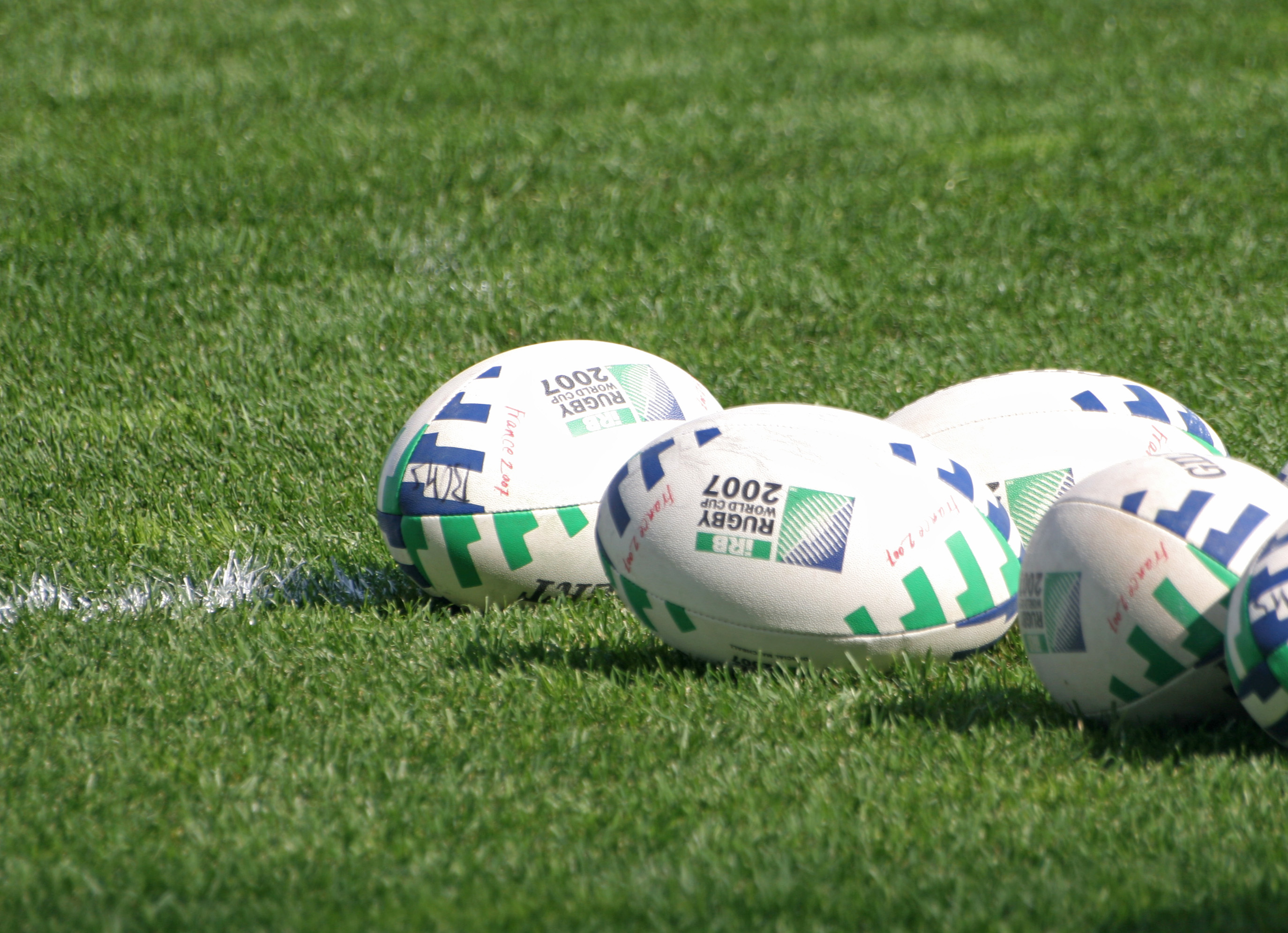 In
recent times, we’ve seen the NZRFU and IRB adopt various experimental
law variations to keep the ball in play longer, with fewer stoppages and
more running rugby, thereby creating a more free-flowing, faster and
exciting style of play.
In
recent times, we’ve seen the NZRFU and IRB adopt various experimental
law variations to keep the ball in play longer, with fewer stoppages and
more running rugby, thereby creating a more free-flowing, faster and
exciting style of play.You may recall the stat (right or wrong, but it’s the point that matters) that at one stage only 27mins of an 80min game were actually real running time. The rest of the time was used up in fixed plays/stoppages like scrums, line outs etc. A necessary part of the game, but not the key parts. Not the purpose of rugby. ELV’s aimed to improve this. To spend more time playing the running game, less time stationary. Keeping the ball in play.
Now think about your sales process? When was the last time you looked at how much time was spent doing the core sales activity, versus the time spent doing the bits surrounding it (the stoppages). Is the balance right? Are you ‘keeping the ball in play’.
There are many conflictions in sales that can prevent/inhibit us from selling – CRM notes, admin, responding to internal emails etc. Sure, some of these things need to be done. But are you consciously or unconsciously choosing to let them rank ahead of sales activity?
Like the NZRFU and IRB – you need to look at what ‘sales time variations’ you need to put in place to limit the things that prevent you from true sales activity to increase the portion of your available time to ‘sales running time’ rather than stoppages. Keeping the ball in play.
Truly think about it. You have so many hours in the week, how many of them do you truly dedicate to sales? If not many, why? What things are you letting prevent you from selling.
Maybe you need to follow the direction of rugby and change the way you ref your sales time to keep the ball in play more often?
Tuesday, 8 April 2014
Magpie-ing
 In
sales we can be guilty of collecting or searching for ‘shiny things’.
Things that look important and are worth showing off, but don’t
necessarily add value to what we do or amount to anything of value.
In
sales we can be guilty of collecting or searching for ‘shiny things’.
Things that look important and are worth showing off, but don’t
necessarily add value to what we do or amount to anything of value.This isn’t meant as toys – but refers to prospects. It is very easy to fill ones pipeline up with these ‘shiny things’ to make ourselves and/or our bosses feel better. We then have important things in our pipeline – we and they feel better.
We’ve all seen it and, no doubt, some of us have been guilty of it. Chasing those ‘shiny things’ – referring to them at every opportunity, showing them off when someone asks what in your pipeline. Coveting them, but doing very little productive with them. Magpie-ing
What does this do to us?
It distracts us from real prospects. Real business. Real value. Some of the best prospects aren’t glamorous, aren’t big names. In fact, most aren’t. ‘Shiny things’ are notoriously slippery and, when we finally realise we can’t hold on to them, we suddenly realise the opportunity cost(s) of being so fixated on them.
It also makes for difficult conversations with your boss when you finally have to strip these ‘shiny things’ from your pipeline.
Most shiny things are coveted by many people, yet the person who currently holds it usually knows it’s of value, loves it to death and, therefore, it becomes very difficult to make it yours.
Sales Managers aren’t immune from this either. Actions by sales managers can reinforce this behaviour, this blind pursuit for trophy prospects. For example, only celebrating the shiny things in your pipeline reinforces the belief that, as a sales person, you must find them to be recognised as good. So you chase them. Sometimes blindly.
You should start from a solid foundation of which prospects are your ideal clients. Sure, some of these may well be ‘shiny things’ – and, in fact, some should be. Filling your pipeline is important – but please fill it with meaningful prospects, otherwise it just becomes a distraction.
You have to ask yourself three questions:
1. Is this a client I am likely to be able to win?
2. If yes, can I demonstrate the value needed to displace it?
3. How long will this take?
If you can’t answer yes to 1 and 2 – don’t bother with 3. It doesn’t mean drop it entirely, it just means de-prioritise it until something changes that you can change the answer to these questions.
Don’t magpie and base your entire sales strategy around ‘shiny things’. Otherwise you may just end up with a nest full of great names in your pipeline and no business written.
Monday, 31 March 2014
Do You Have Your Why Crossed?
 Some
people undertake sales because they view they have to, or they’re told
to. Some people are in sales roles, but don’t like the sales activity.
Some
people undertake sales because they view they have to, or they’re told
to. Some people are in sales roles, but don’t like the sales activity.
They. Don’t. Want. To.
Undertaking sales activity because you view you have to or are told to isn’t sustainable. It is human nature to resist being told to do something or feeling you have to. They still ‘want to’ do it – but the reason is fear based – fear of reprisal of not doing it. Not because they want to under take the activity itself. Because they are so resistant to the activity - this even clouds their ability to see the outcome.
You need to adjust your mindset to want to do it.
We enjoy the things we want to do. We overcome obstacles to do the things we want to do. We hunger to get better at the things we want to do.
When I say ‘want to do it’ – I don’t mean the activity itself – for example making a call. I mean the act of wanting to connect with a person and business to understand can you add meaningful value to them and their business. This is the why. The call is just the how, the products just the what.
Sales success doesn’t come from what you sell or the process you follow…it comes from your purpose, your why, your compulsion to want to make a meaningful difference to your client.
You ask questions wanting to know and act on the answers because you geniunely care, you drive solutions to their problems and create opportunities for them.
For sales managers – this plays out as well. Until your staff member wants to improve themself, wants to grow their sales skills, wants to understand why they aren’t as successful as they feel they should be – no amount of training/coaching will work. Your sole focus as a sales manager is creating this want internally in them so they drive their own growth and development.
When you get your ‘why’ right – sales is not only easier, but far more enjoyable both for you and your client.
Tuesday, 25 March 2014
The Science of Sales
 If
you view sales as a science experiment – there are four reactants that,
when combined, result in your sales product. These are:
If
you view sales as a science experiment – there are four reactants that,
when combined, result in your sales product. These are:People: This is about the relationship between you, your team and the client. This is about developing and maintaining trust and credibility
.
Purpose: This is the why – why you wish to do business with your client/prospect and vice versa. This is can measure the ‘meaningfulness’ of the relationship.
Product: This is what you are offering and what it provides to your client/prospect
Price: This is what is costs your clients/prospect to do business with you.
The one thing that doesn't vary is the volume of the beaker you’re putting the ingredients in – this is finite.
What does all this mean?
In short, as a sales professional you have to choose the most appropriate mix of reactants to result in a success outcome for you and your client. There are some interesting things to consider here:
- If you choose not to use People or Purpose – your beaker is full of Price and Product. This may work for you based on what you’re selling – but make sure it is a conscious and considered strategy to not use People or Product.
- The more you fill your beaker with People or Purpose, the less you have to use Product and Price
- The order is also important like any good experiment. Combining the wrong can be disastrous as can adding them to soon. For example – adding Price soon after People can negate the effects of People or adding Product first can mean you can’t add People and Purpose later.
The most difficult factor is it is your client who determines whether the combination is successful – your biggest focus is responding to their feedback and adjusting the combination as you go.
Subscribe to:
Posts (Atom)